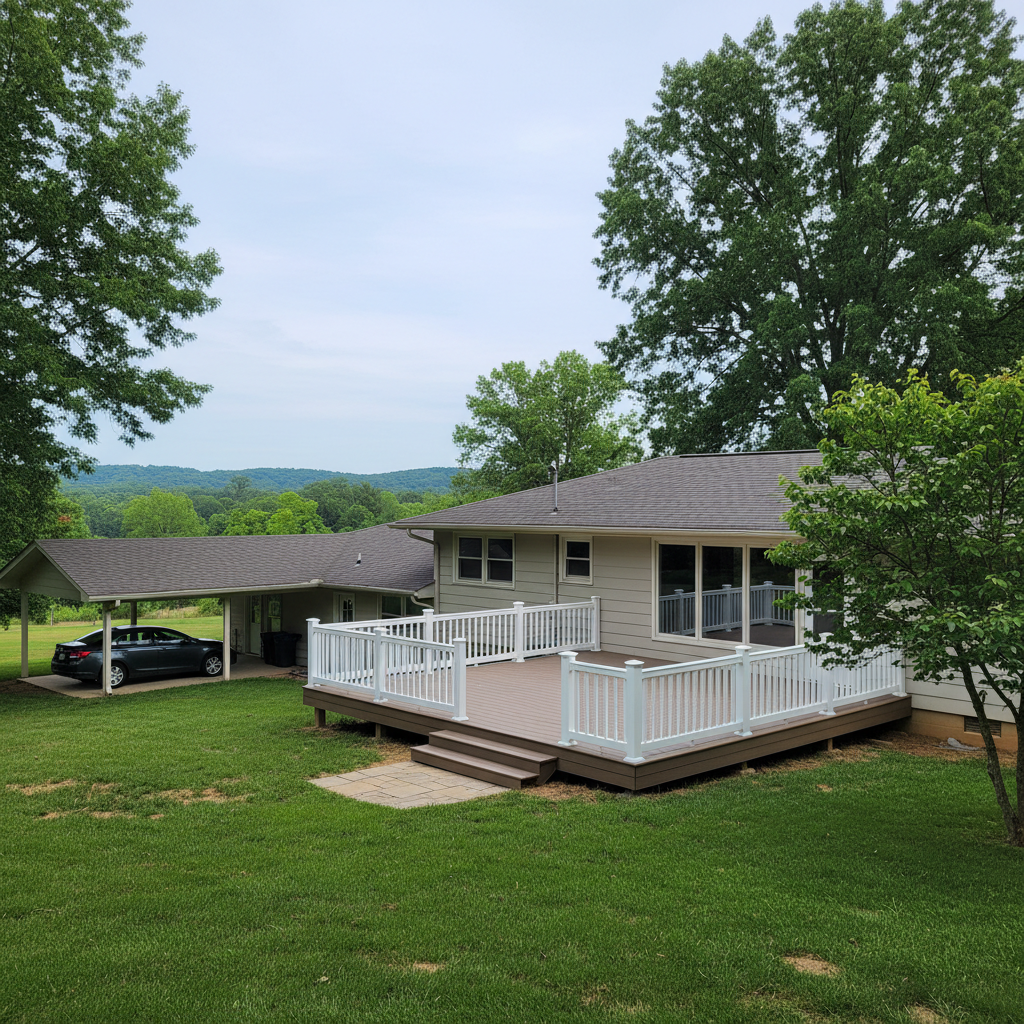
A deck is one of the few home projects where the finished product sits right on top of the structural part people never see. Once the boards go down, the footings, the ledger attachment, and the joist hangers are hidden for good. That's exactly why picking the right builder matters more here than it would for, say, a fence.
Central Arkansas doesn't make this easy. The clay soil under most Sherwood lots swells when it's wet and shrinks when it dries out, and a footing poured too shallow will move with it. Code around here generally wants footings down to undisturbed soil, often 12 inches minimum below grade, deeper if the inspector sees fill dirt or loose material. A builder who pours a quick 8-inch footing to save a day of digging is setting you up for a deck that heaves a little every spring.
What the weather does to a deck year after year
Summers in Sherwood run hot and humid, plenty of afternoons in the mid-90s with thunderstorms rolling through most weeks from April into early fall. That heat and moisture cycle is hard on fasteners and hard on wood that isn't properly treated. Pressure-treated pine needs stain or sealer within the first year, and realistically it needs it again every two to three years after that, or the boards start cupping and the grain opens up.
Winters here aren't brutal, but they're not nothing either. We usually see somewhere around 15 to 20 nights a year that dip below freezing, sometimes with an ice storm mixed in. That freeze-thaw cycling is what pushes shallow footings around over a few seasons. It's also why galvanized or stainless hardware matters near the ground. Cheap fasteners in treated lumber corrode faster than people expect, especially with the newer chemical treatments used since the older arsenic-based ones were phased out.
The ledger board is where most failures start
If a deck is attached to the house, the ledger board bolted to the rim joist is the single most important connection on the whole structure. Water gets behind an improperly flashed ledger, the rim joist rots from the inside, and nobody notices until the deck starts to pull away from the house. A builder should be using proper flashing, not just caulk, and should bolt the ledger with lag bolts or through-bolts, not deck screws. If someone tells you screws are fine for a ledger attachment, that's a reason to walk.
This matters even more on older houses. A lot of Sherwood's housing stock went up from the 1970s through the 1990s, and some of those rim joists are thinner than what you'd see in new construction, or they've already taken on some moisture damage over the decades. A good builder will pull back the siding, look at the actual framing, and tell you if it needs sistering or reinforcement before the ledger goes up. A builder who skips that step and just bolts to whatever's there is gambling with your house, not just the deck.
Permits aren't optional, and that's a good thing
Most decks attached to a house, and plenty of freestanding ones over a certain height, need a permit through the city. In Sherwood that means a building permit application, a site plan showing setbacks from the property line, and at least two inspections: one for the footings before concrete goes in, one for the framing before the decking boards cover everything up. If your builder says permits are a hassle and suggests skipping it, understand what that actually means. Nobody is ever going to check that footing depth, that ledger flashing, or that guardrail height except the inspector, and once the decking's on, it's too late to check anything.
Setbacks matter too. Some Sherwood neighborhoods, especially newer subdivisions, have HOA rules on top of the city's setback requirements, so a deck that's perfectly legal by code can still get you a letter from the HOA if nobody checked first. A builder who's worked in the area regularly should already know which subdivisions are picky about this.
What a real estimate looks like
A vague one-page quote that just says "build deck, $9,500" tells you nothing. A real estimate breaks out the footing count and depth, the framing lumber size (2x8 vs 2x10 joists matters for span and bounce), the decking material, the railing style, and whether the price includes the permit fee and the flashing. If composite decking is quoted, the estimate should specify the brand and board width, because composite expands and contracts with heat more than wood does and needs wider gaps between boards in summer installs than winter ones.
Ask how they handle the guardrail. Code generally calls for 36 inches of height on a residential guardrail and baluster spacing that keeps a 4-inch sphere from passing through. Since the building code changes that followed a string of deck collapses nationally, most jurisdictions also want lateral load connectors, like hold-down tension ties, at the ledger to keep the deck from pulling away from the house sideways. If a builder doesn't bring this up unprompted, ask directly.
Red flags worth walking away from
- No permit mentioned, or a suggestion to "keep it under the radar."
- A quote with no lumber sizes, no footing depth, no fastener type listed.
- Reluctance to show insurance or a contractor's license number.
- A push to start before a written contract is signed.
- No mention of ledger flashing at all when the deck attaches to the house.
None of this means you need to interrogate someone for an hour. A builder who's actually done this work in Sherwood will bring most of it up before you ask, because they've seen what happens when it's skipped. That's the real test. Not how polished the pitch sounds, but how much they already know about your soil, your street, and your house before they've written a number down.
We've built and repaired decks all over Sherwood and the towns around it, and we're happy to walk through footing depth, lumber choice, or permit questions before you sign anything. You can see more about our deck builder work here.